
Abstract
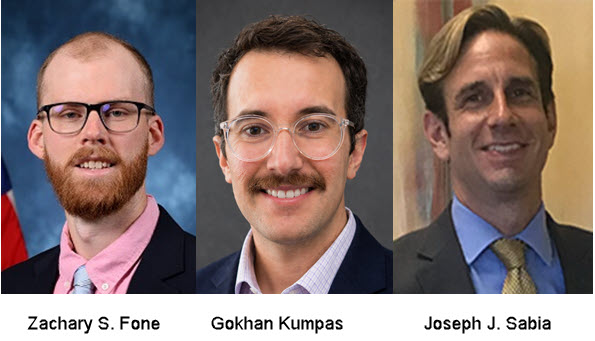
Excerpted From: Zachary S. Fone, Gokhan Kumpas and Joseph J. Sabia, Recreational Marijuana Laws and Racial Disparities: New Evidence on Arrests and Deaths of Despair, 69 Journal of Law & Economics 251 (May 2026) (39 Footnotes) (Full Document)
[W]hile white and Black and Brown people use marijuana at similar rates, Black and Brown people have been arrested, prosecuted, and convicted at disproportionate rates. --President Joseph R. Biden (2022)
 The causes of racial disparities in arrest rates are hotly debated among US policymakers (Lloyd 2020; Santhanam 2020). While race-specific differences in human capital acquisition and labor market opportunities may play a role (Gould, Weinberg, and Mustard 2002; Lochner and Moretti 2004), racial bias in prosecutorial decisions (Arnold, Dobbie, and Yang 2018) and policing practices (Goncalves and Mello 2021) have taken center stage in policy debates. The most high-profile policing reforms include increased monitoring of interactions between suspects and police (Ariel, Farrar, and Sutherland 2015; Henstock and Ariel 2017; Lum et al. 2019; Braga et al. 2020; Braga, MacDonald, and McCabe 2022; Demir, Braga, and Apel 2020; Zamoff, Greenwood, and Burtch 2022; Ferrazares 2023), greater racial diversity in police hiring (Ba et al. 2021), and increased investments in diversity training (Office of Governor 2020). In addition, criminal justice reformers have pursued the decriminalization (or depenalization) of nonviolent criminal offenses (Woods 2021; Brown 2022) with historically large racial disparities in arrests (American Civil Liberties Union [ACLU] 2013, 2020). One of the most prominent such reforms has been the legalization of recreational marijuana.
Between January 2010 and December 2024, 24 states and the District of Columbia adopted recreational marijuana laws (RMLs). These laws legalize possession and cultivation of a limited amount of marijuana (for example, 1 or 2 ounces) by anyone 21 years of age or older for any reason, including recreational purposes. Purchases of marijuana can be made at recreational dispensaries by showing proof of age. Unlike most medical marijuana laws (MMLs)--which have been adopted by 38 states and the District of Columbia--RMLs do not require registration as part of a state registry nor do they require a doctor’s recommendation to treat an “allowable medical condition.” Nearly all states that have legalized recreational marijuana permit home cultivation, that is, marijuana to be grown at home.
Proponents of RMLs point out that ending the prohibition on recreational marijuana can generate substantial social cost savings, as the annual costs associated with enforcing prohibition--including policing, court, and prison costs (Beckett and Herbert 2009; French et al. 2022)--total $3.6 billion annually (ACLU 2013). Moreover, because the majority of marijuana-related arrests are for nonviolent offenses (ACLU 2001)--such as street-level drug dealing and transport of small quantities of drugs for transactions (that is, actions of couriers; Fellner and Vinck 2008)--the crime-related social benefits of marijuana prohibition are likely small, especially given scant evidence of gateway effects to harder drug use (Sabia et al. 2024). Less than a third of such arrests are related to higher level offenses such as the distribution of large quantities of drugs to dealers (King and Mauer 2006).
In addition to efficiency gains, proponents of marijuana legalization argue that RMLs can achieve important racial-equity-related ends given substantial racial disparities in enforcement of marijuana prohibition. Despite comparable marijuana usage rates, Black people are 3.6 times more likely than White ones to be arrested for marijuana offenses (ACLU 2020) and substantially more likely than White people to enter prison because of a marijuana-related conviction (Bureau of Justice Statistics 2021). Because having an arrest record may contribute to substantial labor market penalties (Pager 2003; Agan and Starr 2018; Doleac and Hansen 2020; Dobbie, Goldin, and Yang 2018; Mueller-Smith and Schnepel 2021), enforcement of marijuana prohibition may exacerbate racial/ethnic disparities in employment and earnings, as well as the risk of recidivism. Thus, the adoption of RMLs could generate important economic benefits, particularly for those who have been disproportionately harmed by prohibition.
This study explores how RML adoption affects racial disparities in arrests. Using data from the 2000-2019 Uniform Crime Reports (UCR) and a two-way fixed-effects (TWFE) approach, we find that RML adoption is associated with a decline of 498.2-561.2 marijuana-related arrests per 100,000 persons (92-104 percent) among Black adults and a reduction of 128.0-144.7 arrests (78-88 percent) among White adults. While RMLs do not eliminate the Black-White gap in the marijuana arrest rate--due to large pretreatment differences in the number of arrests (despite comparable marijuana usage rates) and because some marijuana offenses remain illegal following RML adoption (for example, possession of larger quantities of marijuana and underground market sales)--our findings suggest that RMLs substantially reduce racial disparities in (absolute) marijuana-related arrests. Our most parsimonious TWFE estimates reflect that for Black people the marijuana arrest rate fell from approximately 539 arrests to 41 arrests per 100,000 persons following the adoption of an RML; for Whites, the rate fell from about 164 arrests to 36 arrests per 100,000 persons.
Turning to nonmarijuana drug arrests and arrests for part I offenses (property crime and violent crime), we find little evidence that RMLs significantly reduce racial disparities in arrests for these offenses. Moreover, the pattern of empirical findings does not allow us to rule out the possibility that post-RML redeployment of policing resources from enforcing marijuana prohibition to other crime fighting may exacerbate Black-White disparities in some nonmarijuana-related arrests.
Finally, we examine the impact of RMLs on racial disparities in deaths of despair. Using data from the 2000-2019 National Vital Statistics System (NVSS), we find that RML adoption reduces opioid-involved mortality, a result again consistent with the hypothesis that marijuana and opioids are economic substitutes (Sabia et al. 2024). However, we show that this causal effect is driven largely by non-Hispanic Whites, a demographic group documented to be disproportionately affected by the US opioid epidemic (Case and Deaton 2015). Together, our results suggest important distributional consequences of RML adoption by race.
[ . . . ]
On October 6, 2022, President Biden instructed “the Secretary of Health and Human Services and the Attorney General to initiate the administrative process to review expeditiously how marijuana is scheduled under Federal law” (Biden 2022). An important impetus for this policy change was a concern that marijuana prohibition had larger negative impacts on racial and ethnic minorities relative to non-Hispanic Whites. This study provides new estimates of the effects of state-level recreational marijuana laws on racial disparities in arrests and in deaths of despair.
Our findings show that the adoption of an RML leads to a decline of 561.2 marijuana arrests per 100,000 persons among Black adults and a decline of 144.7 marijuana arrests among White adults. In absolute terms, RMLs reduce the Black-White gap in marijuana arrests by 416.5 arrests per 100,000 persons, which suggests that Black adults disproportionately gain from reduced arrests. While disparities in absolute Black-White marijuana arrests are narrowed by RMLs, the gap in arrests is not entirely eliminated, due in part to large pretreatment differences in arrests and the fact that not all marijuana-related activity is legal following enactment of an RML, including marijuana possession among those under age 21, possession of more than 1-1.5 ounces, and unauthorized sales.
We find little evidence that RML adoption reduces Black-White disparities in nonmarijuana drug arrests or property crime arrests. However, there is some evidence that RML adoption may widen Black-White disparities in some nonmarijuana drug arrests and those for violent offenses, particularly when open recreational dispensaries are permitted. While demand-side responses to RMLs could be an explanation, we cannot rule out the possibility that policing resources are reallocated to enforcement of nonmarijuana criminal offenses in a racially disparate manner.
With respect to deaths of despair, we find that RML adoption is associated with a reduction in all drug deaths and, in particular, opioid-involved mortality among non-Hispanic Whites. Such an effect is not observed for Blacks and Hispanics. Indeed, we find some evidence that RML adoption may widen disparities in drug overdose deaths. This finding is consistent with the hypothesis that the demographic group hardest hit by the onset of the opioid epidemic in the United States has relatively larger gains from RML adoption.
Together, our findings suggest that prior estimates of the effects of RMLs on arrests and mortality masked important distributional effects by race that disproportionately benefit demographic groups that have faced important vulnerabilities. For instance, the costs of having an arrest record on economic well-being are substantial, particularly for historically marginalized groups, including young Black men. The magnitudes of our estimated declines in marijuana arrests suggest that RML adoption results in approximately 6,600 fewer marijuana arrests per treatment-state-year for Black adults and about 16,200 fewer arrests per treatment-state-year for White adults. These declines translate to at least some decline in the number of individuals with a recent criminal record (to the extent that some marijuana arrestees do not have recent prior arrest records). Given experimental evidence that the absence of a drug-related criminal record is associated with a nearly 60 percent higher likelihood of receiving a job callback (Agan and Starr 2017), our findings suggest potentially important labor market gains.
Zachary S. Fone, US Air Force Academy; Gokhan Kumpas, California State University, Los Angeles; Joseph J. Sabia, San Diego State University.