
Abstract
Excerpted From: John Thomas Rider, Becoming a Subject of Rights: Strategies of Indigenous Self-Representation for International Rights Claims in the Area of Uganda’s Mt. Elgon National Park, 39 Harv. Hum. Rts. J. 101 (Spring 2026) (Full Document)
 Astride the border between Uganda and Kenya lies Mt. Elgon, one of the largest volcanoes on the African continent. The mountain is pockmarked with a dense network of caves, draped in cascades of waterfalls, and is crowned with a tonsure of forest that yields to moorland approaching the crater at the mountain’s peak. This moorland comprises the ancestral territory of the Benet Mosopisyek, a self-described Indigenous people who have been displaced and forced below the forest line.
The Benet Mosopisyek have been campaigning for decades to regain access to their up-mountain ancestral territories, which the British colonial regime, and the Ugandan Successor-state, have determined comprise a place too beautiful for human inhabitation. Each governing regime has ascribed a protected status to this territory in a bid to “preserve” the territory as a natural park. This begs the question: who is the mountain being preserved for, and what state-of-nature is the government trying to conserve? After all, before the imposition of conservation governance, the Benet Mosopisyek had been on Mt. Elgon and had been a part of Mt. Elgon’s environment since time immemorial.
It is no wonder Mt. Elgon was targeted from conservation exclusion: the mountain’s beauty is undeniable, and one is immediately confronted by its grandeur as one ascends its slopes. On the Ugandan side of the mountain, the newly renovated Kapchorwa-Suam highway traces a corniche around the mountain. The Kapchorwa-Suam highway is lined with Eucalyptus thickets on terraced escarpments overlooking the Karamoja plain, and it gradually wends up through the foothills until, at Kiguli, one abruptly finds oneself a break overlooking the earth. Round one more sharp bend from Kiguli to Sipi and another spur of mountain yields to reveal the main tier of Sipi Falls, which pours nearly one hundred meters over a gaping cave mouth that amplifies its roar across a narrow valley. The mountain is nothing short of sublime, but people live and make lives in this Eden.
The Benet Mosopisyek are one such people living upon the beautiful slopes of Mt. Elgon, though they are legally subsumed into their neighboring majoritypopulation for the purpose of census categorization, as de jure members of the Sabiny tribe. Nevertheless, the Benet Mosopisyek self-describe as a sui generis Indigenous people, have been described in English-language academic literature as distinct from the majority populations surrounding them since at least the early 1960s, and have been politically active and organized on the basis of maintaining a separate identity from the Sabiny for at least fifty years.
The Benet Mosopisyek have borne substantial suffering on the basis of their home’s beauty. As historical denizens of the mountain’s uppermost regions, now encompassed in a national park, the Ugandan government has for decades subjected the Benet Mosopisyek to displacement and violence in a bid to maintain the space as a pristine, ahistoric world set-apart from the domain of mankind.
In response to this dispossession and violence, the Benet Mosopisyek have undertaken an adroit international political and legal campaign to attain recognition as an Indigenous group. Their objective is to lay claim to protections and rights accorded to Indigenous peoples, to the ultimate end of reclaiming access to their ancestral territories against a regime of conservation-based displacement that some scholars refer to as “Fortress Conservation.”
[ . . . ]
Despite being subject to vicious and persistent dispossession, alienation, and material disenfranchisement over a period of one hundred years--or perhaps, because they are conspicuous subjects of these abuses--the Benet Mosopisyek have been able to organize themselves into an extremely effective political apparatus. To date, they have won in courts and successfully ensconced themselves in a robust coalition of international actors all aiming to elevate the Benet Mosopisyek to a full realization as a subject of rights.
In so doing, the Benet Mosopisyek have demonstrated an extremely adroit understanding of the limitations of domestic law, and the opportunities inhered in international law, to advance their cause. Political actors in the Benet Mosopisyek community have demonstrated a clear understanding of the capacious definition of indigeneity to which they wish to lay claim, and have promulgated substantial media to show an international audience that they are the subject of such rights as a matter of fact, so that they may be understood to be subject to those rights as a matter of law. And, in interviews, the Benet Mosopisyek have made it evident that they expertly and intentionally cultivate their performance of their Indigenous identity in direct response to the political pressures associated with it.
The Benet Mosopisyek continue in their campaign to the present. As late as December of 2024, they are still working toward the realization of repair promised to them in domestic legal arenas. It seems likely that they will pursue these cases to the international arena if the exhaustion of domestic remedies does not bare out in their favor. Simultaneously, the Benet Mosopisyek have organized an effective political coalition of actors across the globe invested in the betterment of their material conditions, which is the ultimate aim of their claims to rights. Their political campaign, too, persists.
Human rights, as a discourse, has an expressive potency that often transcends its legal efficacy. Human rights instruments are in some way utopian. It is no coincidence that the most potent enunciation of the rights of indigenous persons to date is found in a soft law instrument that expresses an optimistic set of obligations on states, but understands it cannot yet bind states to the realization of the rights therein. Nevertheless, human rights actors and subjects understand that there is expressive political power inhered in the claim that one is the denied and abused subject of unrealized human rights, and, that there is real expressive political power in the assertion that a state apparatus is a human rights violator.
The Benet Mosopisyek understand that power and lay claim to the rights afforded to them as an Indigenous people not because they know it will necessarily realize legal effect, but because they know that if they can successfully argue that they are the subjects of rights denied, they may thereafter move toward the fuller material realization of such rights through political action. Time will show whether this strategic assessment is correct; many suspect and hope that it shall be.
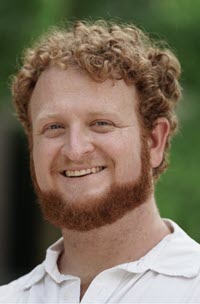
John Thomas Rider earned a J.D. from Harvard Law School in 2025, studied anthropology at the University of Oxford, and practices law in London.